Why Your Gut Says No: Decoding the Urban Signals That Kill a Walk Before It Starts
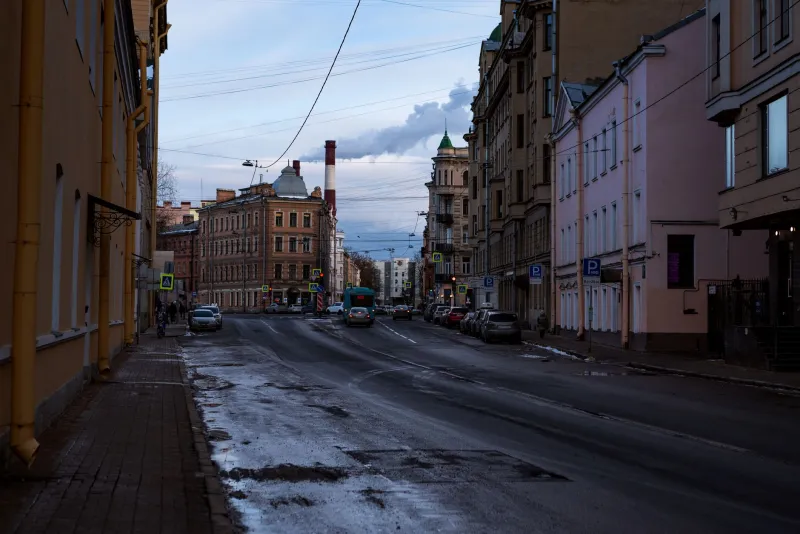
You know the feeling. You're about to cross the street, you glance left down a block that's technically fine — sidewalk intact, no obvious danger — and something in your chest just tightens. You pivot. You take the long way. You never really think about why.
Urban explorers talk a lot about the walks they take. The hidden staircases, the forgotten rail corridors, the alley that opens onto something beautiful and unexpected. But there's an equally fascinating story in the walks people don't take — the routes they reject before a single step is committed. These are what some urban researchers are starting to call dead zones: not vacant lots or abandoned buildings, but stretches of city that feel psychologically uninhabitable, even when they're technically safe.
So what's actually happening when your body says no?
The Gut Isn't Random
Let's start with the science, because your instincts aren't as irrational as they might seem. Human beings evolved to assess environments for threat and reward at a glance — we're pattern-recognition machines with legs. When you look down a street and feel dread, your brain has already processed dozens of micro-signals: the angle of shadows, the absence of other pedestrians, the width of the sidewalk relative to the road, whether there are windows facing the street, how far you can see before the sightline cuts off.
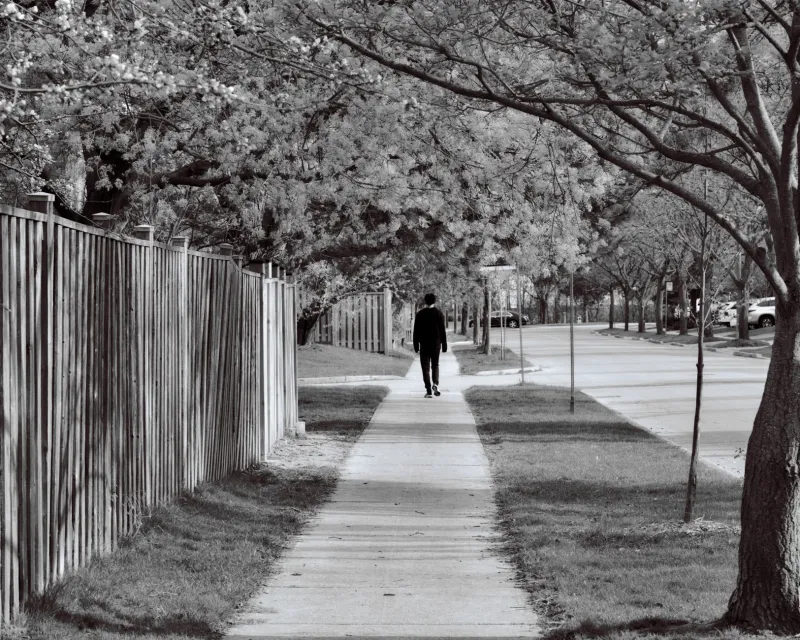
Environmental psychologists call this prospect and refuge theory — a framework developed by geographer Jay Appleton suggesting that humans feel safest in spaces that offer a clear view ahead (prospect) while maintaining some sense of enclosure or cover (refuge). A street that's all exposure — wide, featureless, no tree canopy, no setback buildings — triggers the same low-level anxiety as standing in an open field. A street that's all enclosure — narrow, shadowy, blocked sightlines — can feel like a trap.
Most of the routes people instinctively avoid hit one of those two extremes hard.
What the Street Is Actually Telling You
Take lighting. Not just whether it's dark, but how it's dark. Overhead sodium-vapor lights cast straight down, creating pools of brightness surrounded by deep shadow. That pattern — bright spots, black gaps — is actually harder for your eyes to adapt to than consistent low light. Your brain reads it as unpredictable, which translates emotionally as unsafe. Newer LED streetlights spread illumination more evenly, and pedestrian surveys consistently show people feel more comfortable walking under them — even at the same lumen output.
Then there's architecture. Buildings that turn blank walls or parking garage facades toward the sidewalk are notorious walk-killers. Urban designers call this dead frontage, and it's not just aesthetically boring — it removes what researchers call natural surveillance, the passive sense that people inside buildings can see what's happening outside. Eyes on the street, as Jane Jacobs famously argued, are one of the most powerful safety mechanisms a city has. When the architecture removes those eyes, walkers feel it viscerally, even if they couldn't explain why.
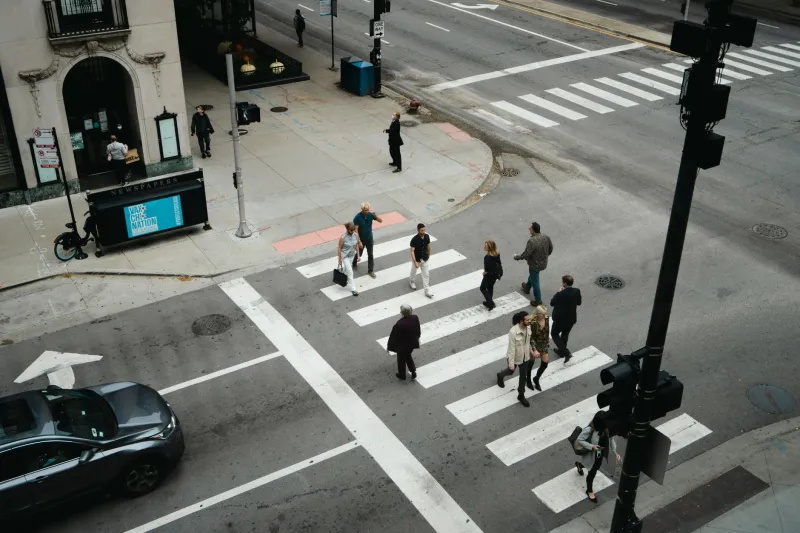
Wind tunnels are another underrated factor. Certain street configurations — particularly in dense downtown grids flanked by tall towers — create consistent, uncomfortable wind corridors. Chicago's reputation for brutal winters isn't just about temperature; it's about specific blocks where the built environment turns a cold day into a punishing one. People learn those routes and avoid them, often without consciously cataloging the reason.
Social Signals and the Absence of People
Here's the paradox of pedestrian comfort: nothing makes a street feel safer than other pedestrians. And nothing drains the appeal of a route faster than its emptiness. When a block has no foot traffic, that absence itself becomes a signal — your brain asks, why isn't anyone else here? — and tends to answer that question pessimistically.
This creates a feedback loop that's genuinely hard for cities to break. A route feels uninviting, so fewer people use it, which makes it feel more uninviting, which pushes the remaining users away. Over time, the route becomes functionally abandoned even if nothing explicitly bad has ever happened there. Urban planners in cities like Detroit and Cleveland have documented this phenomenon in post-industrial neighborhoods where the street grid is intact but the social fabric that once animated it has thinned to almost nothing.
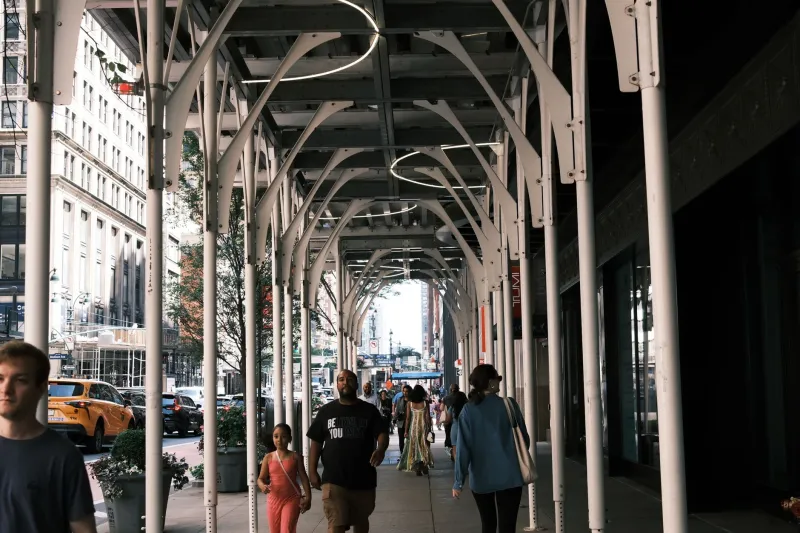
Conversely, a single well-placed business — a coffee shop with outdoor seating, a bodega with a propped-open door — can break that cycle. The presence of even one active street-level use generates enough foot traffic and ambient noise to shift how a block registers emotionally.
When Instinct Becomes Bias
Here's where it gets complicated, and where honest conversation matters. Not every gut reaction to a street is a reliable environmental reading. Research in urban psychology has repeatedly shown that walkers — particularly white walkers in American cities — often misread racially and economically diverse neighborhoods as threatening, even when objective safety metrics say otherwise. The "dead zone" feeling isn't always the street's fault. Sometimes it's the walker's.
This distinction matters enormously for how cities interpret pedestrian avoidance data. If planners see that a route through a predominantly Black or Latino neighborhood is underused by outsiders and respond by redesigning it to feel "safer," they risk displacing the community that actually uses it comfortably every day. The problem isn't the street. The problem is the bias being imported onto it.
Urban designers working in equity-focused planning increasingly push back on the instinct to optimize for the comfort of the most anxious potential user. Instead, they ask: who is this street already working for, and what would it mean to center their experience?
What Cities Can Learn From Avoided Routes
Mapping the routes people skip is genuinely useful data — cities just have to be careful about how they use it. Pedestrian flow studies, increasingly done through anonymized smartphone location data, can identify the streets people route around even when those streets would be more direct. That kind of consistent, systematic avoidance often points to real, fixable problems: a broken streetlight that's been out for six months, a stretch of sidewalk that floods every time it rains, a block where a shuttered business left dead frontage on both sides.
Some cities have started incorporating "walk audits" — structured walking assessments done by diverse community members — into their planning processes. Participants walk a route together and flag the moments where something feels wrong, then debrief to figure out which reactions are environmental and which are personal. It's a remarkably low-tech tool that surfaces problems no traffic study would catch.
Trust Your Feet, Question Your Assumptions
The next time you find yourself pivoting away from a perfectly navigable block, it's worth pausing for a second. What exactly triggered that response? Is it the lighting? The blank wall? The wind? The absence of other people? Or is it something you brought to the street that the street didn't put there?
City walking is, at its best, a practice of paying attention — to the environment and to yourself. The streets that feel wrong before you've taken a single step are often the most revealing ones on the map. They're telling you something. The trick is learning to listen carefully enough to figure out what.
QWalk exists for exactly this kind of exploration — not just the routes that reward you immediately, but the ones that make you ask harder questions. Sometimes the most interesting walk is the one you almost didn't take.