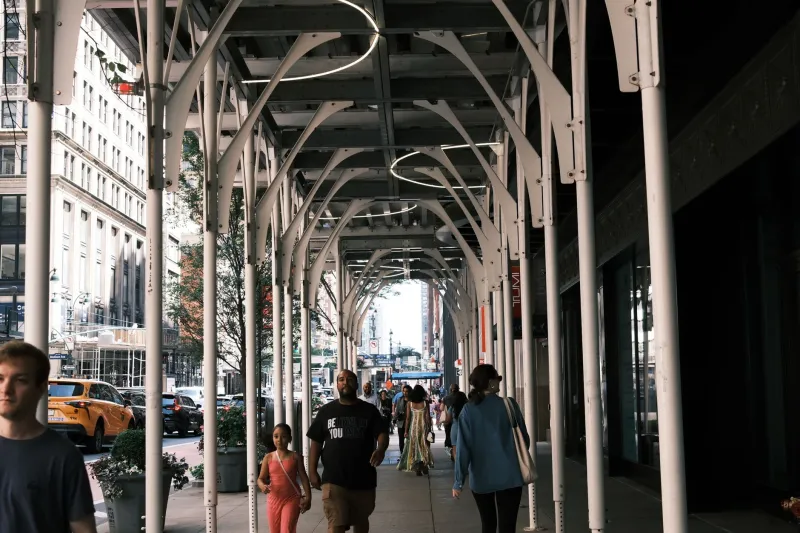
Six Blocks and a Lifetime: The Psychology of the Walkers Who Never Wander Far
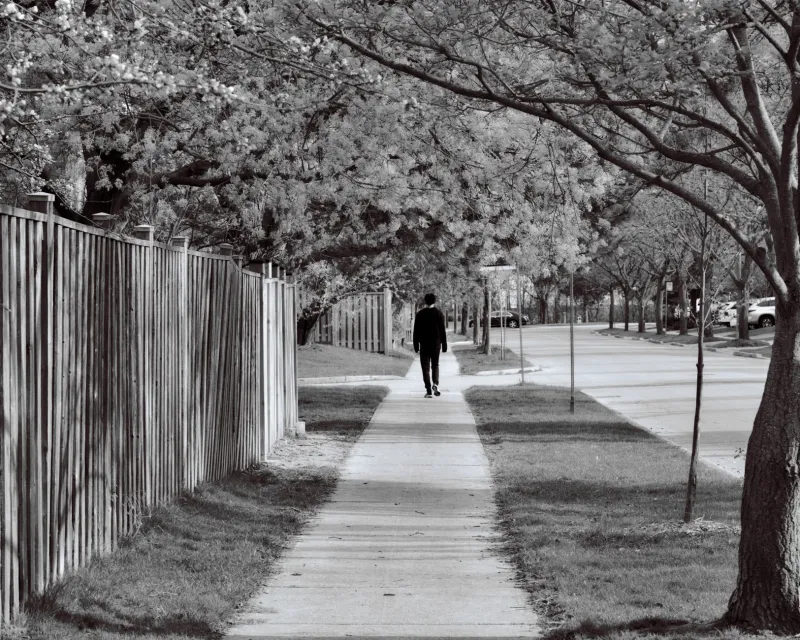
Ask most people to describe their neighborhood, and they'll draw you a map that's almost embarrassingly small. A coffee shop on one corner. A park two blocks west. A bodega, a dry cleaner, a stretch of sidewalk where the elm tree roots have buckled the concrete into something that looks almost intentional. That's it. That's the whole world — and for millions of urban walkers across America, that's more than enough.
There's a term urban psychologists have started using more frequently: walking territory. It's not a formal clinical label, but it describes something real and measurable — the compact geographic range that repeat pedestrians return to again and again, often without any conscious decision to do so. Studies out of urban behavior labs suggest the average city resident's regular walking footprint is shockingly contained, sometimes spanning fewer than eight square blocks even in cities with hundreds of walkable miles available to them.
So what's keeping us close? And is that actually a problem — or is it exactly how deep urban attachment is supposed to work?
The Pull of the Familiar
Dr. Leila Okafor, an environmental psychologist who studies pedestrian behavior in mid-sized American cities, puts it plainly: "Familiarity isn't the enemy of exploration. For most walkers, familiarity is the destination."
Her research, which tracked walking patterns in neighborhoods across Cleveland, Austin, and Portland, found that repeat pedestrians develop what she calls a "cognitive intimacy" with their micro-territory — a layered mental map that goes far beyond basic navigation. They know which stoops are occupied on Tuesday afternoons. They notice when the flower boxes on a particular brownstone change with the seasons. They can tell you, without looking, exactly how many steps it takes to get from the corner crosswalk to the door of their building.
That kind of knowledge isn't passive. It's accumulated, almost like a long conversation with a place. And it creates attachment in the same way repeated conversations create friendship.
"Walkers who stay in a small territory aren't being incurious," Okafor says. "They're going deeper instead of wider. That's a completely different kind of exploration."
What Repeat Routes Actually Do to Your Brain
There's neuroscience underneath all of this, too. When you walk the same route repeatedly, your brain isn't just storing directions — it's building a rich associative network. The smell of the bakery on Thursday mornings gets linked to the memory of a phone call you took while passing it. The particular quality of late afternoon light on a certain stretch of sidewalk registers as something close to comfort.
Over time, a familiar walking route becomes less like a path and more like a personal archive. Every block holds a timestamp. Every corner is annotated with experience.
Marcus Delgado has lived in the same Pilsen neighborhood in Chicago for 31 years. He walks the same six-block loop almost every morning — not because he hasn't thought about varying it, but because, as he puts it, "the route tells me how the neighborhood is doing."
"I notice things other people don't," he says. "That building on 18th — I watched it go from a print shop to vacant to a gallery to vacant again over twenty years. I know that story. I lived that story. Someone walking through once doesn't see any of that."
For Marcus, the familiarity isn't stagnation. It's accumulation. The route is the same, but the walk is never identical.
Urban Design and the Invisible Fence
City planners have known for decades that built environments shape walking behavior in ways residents rarely consciously register. But the factors that create walking territories are subtler than just where the sidewalks are.
Research consistently shows that walkers anchor themselves to what urban designers call legible spaces — areas where the streetscape communicates clearly, where the scale feels human, and where there's enough visual variety to sustain attention without overwhelming it. When those conditions exist, people don't just pass through. They stay, return, and eventually claim the space as their own.
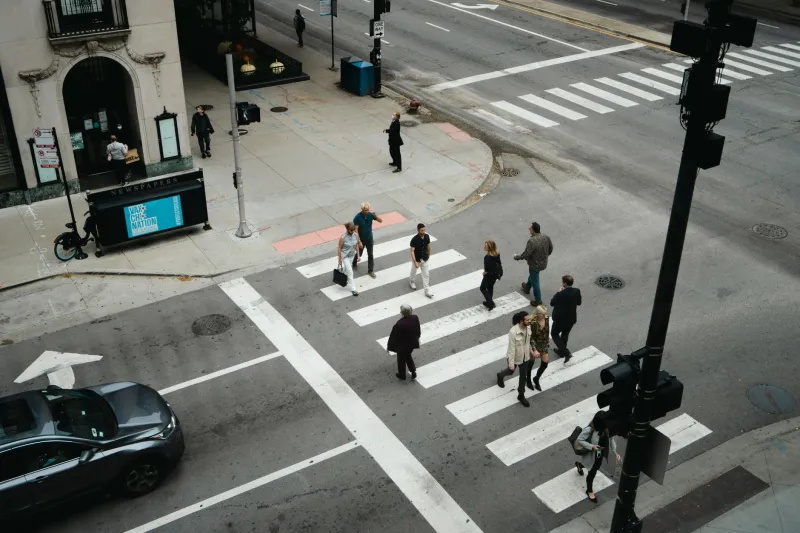
Conversely, when a neighborhood's edges become hostile — a wide arterial road with no crosswalk, a stretch of blank parking structure facades, a block that signals "this space is not for pedestrians" — walkers don't cross. Not because of a conscious decision, but because the environment has quietly closed a door.
This is how walking territories get drawn. Not by the walker, exactly — but by the city, in collaboration with the walker's instincts.
"Most people think they're choosing their route," says urban planner Tamsin Reyes, who works on pedestrian infrastructure in the Southwest. "But the street is making a lot of those choices for them. The comfortable, human-scaled blocks get walked. The hostile ones get avoided. Over time, you end up with a territory that the city basically designed for you."
The Difference Between Passing Through and Knowing
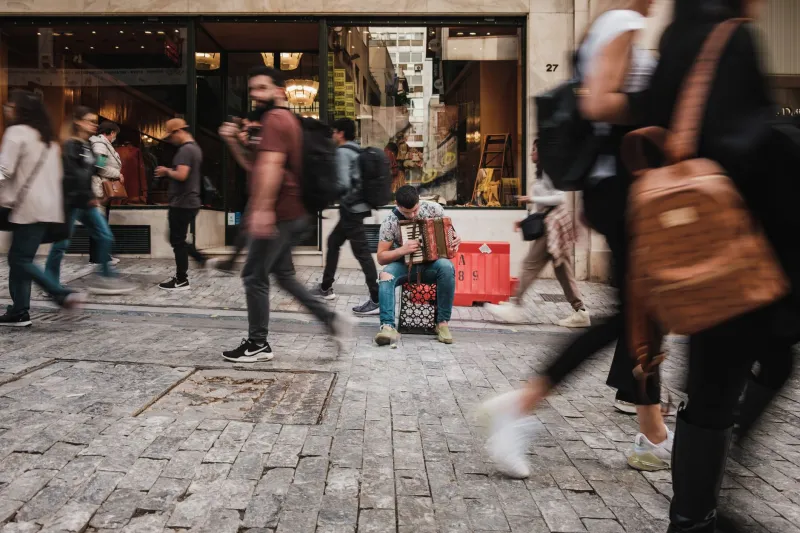
Here's the thing travel culture doesn't always acknowledge: covering ground and knowing a place are not the same activity. The tourist who walks fifteen miles across a new city in a single day sees more blocks than Marcus Delgado has walked in three decades. But ask them both what's changed on a particular corner over the last five years, and only one of them has an answer.
There's a growing conversation in urban exploration circles — including among a lot of QWalk readers — about whether the goal of city walking should always be more. More ground covered, more neighborhoods checked off, more variety.
But the walkers who've spent years in a tight orbit suggest something different. Deep familiarity with a small place is its own kind of expertise. It's the difference between knowing a city's geography and knowing a city's life.
Renata Simmons, who has walked the same stretch of Carroll Gardens in Brooklyn for over two decades, describes it as watching a very slow film. "Nothing dramatic happens day to day. But over years, you see everything change. The families. The businesses. What the neighborhood values, what it loses. You can't get that from a walking tour."
Finding Your Six Blocks
If you've never thought consciously about your own walking territory, try this: without looking at a map, sketch the blocks you walk most often. Note the places you return to, the routes you default to, the corners where you slow down without meaning to.
Chances are the area is smaller than you'd expect. And chances are, if you've been in your neighborhood for any length of time, it's richer than you've given it credit for.
The goal of city walking doesn't have to be covering more distance. Sometimes the most rewarding walk you can take is the one you've already taken a hundred times — because walk number one hundred and one is when you finally notice the thing that was always there.
QWalk exists because every block has a story. But the deepest stories? Those belong to the people who never left.