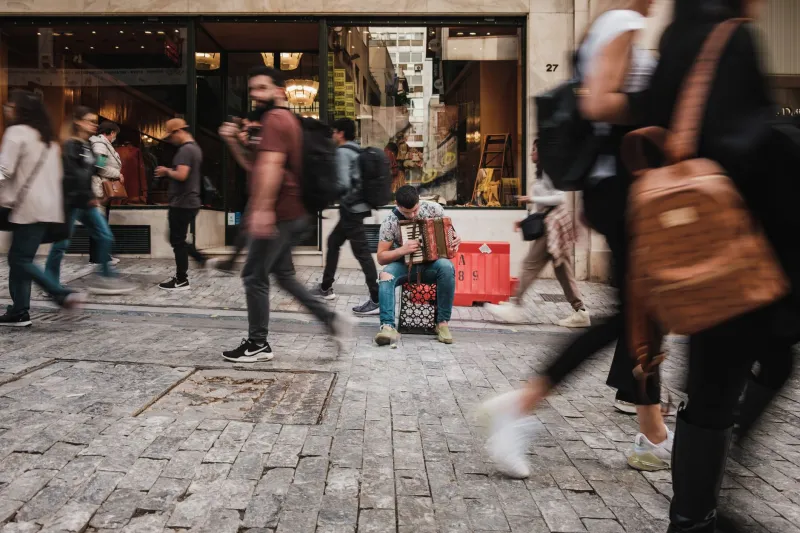
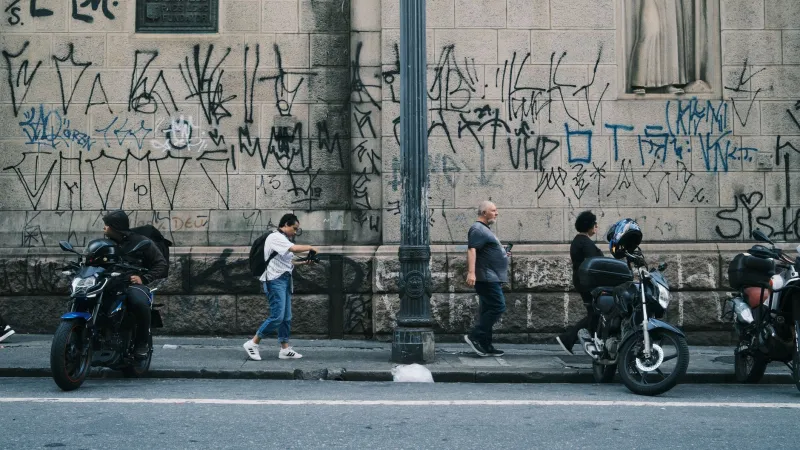
Wired for the Walk: The Unconscious Intelligence That Turns City Streets Into Second Nature
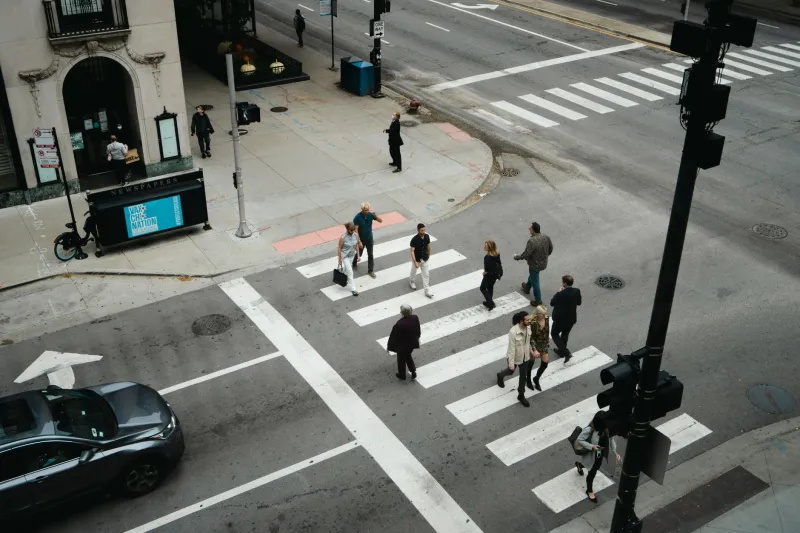
Watch someone who's lived in the same city for twenty years cross a busy intersection. They don't look both ways with the careful deliberateness of a kid learning road safety. They don't check the crosswalk signal. They barely break stride. Something in them just knows — the gap in traffic, the timing of the light cycle, the particular rhythm of that corner at that hour on that day of the week.
Now watch a tourist at the same corner. The hesitation. The head-swiveling. The half-step forward, half-step back. The phone lifted, then lowered.
Same intersection. Completely different experience of it.
What separates these two people isn't confidence or recklessness. It's something closer to a language — one that experienced urban walkers have spent years learning without ever sitting down to study it.
The Internal Metronome
Cognitive scientists who study pedestrian behavior have a term for the timing sense that long-time city dwellers develop: temporal calibration. It's the brain's ability to build a predictive model of an environment based on repeated exposure — essentially, a mental simulation of the street that runs slightly ahead of real time.
"Your brain isn't reacting to the city," explains one urban cognitive researcher whose work focuses on pedestrian decision-making in dense American metros. "It's predicting it. By the time you consciously register that a cab is accelerating, your body has already started adjusting your path. You've seen that pattern ten thousand times."
This is why long-time New Yorkers can tell, without counting, that a Midtown block is about 250 feet long. Why a Chicago regular knows instinctively that the red line stop is closer than it looks from the corner of Wabash. Why a San Francisco local leans slightly into a hill before they consciously register the incline. The city gets encoded into the body, not just the mind.
The metronome isn't just about timing traffic. It's a full-body calibration to a city's particular tempo — the width of its sidewalks, the average speed of its pedestrian flow, the micro-delays built into its crosswalk signals, the specific way its blocks are proportioned. Every city has a different beat, and people who live in them long enough start walking in time with it.
Reading Without Looking
Ask a longtime urban walker how they navigate and most will struggle to explain it. "I just know where I'm going," is a common answer, which is almost useless as an explanation but actually pretty accurate as a description of what's happening neurologically.
What they're drawing on is what researchers call spatial chunking — the brain's tendency to compress familiar sequences of environmental information into single, retrievable units. Instead of processing each storefront, intersection, and landmark as a separate data point, the experienced walker processes the whole block as one chunk. The mental overhead drops dramatically. Attention frees up.
This is why veteran city walkers can hold a full conversation, notice an interesting facade three stories up, and still navigate complex intersections without any apparent cognitive strain. They're not multitasking. They've automated the navigation layer.
It's also why experienced walkers often struggle to give directions. They know the route perfectly — they just can't easily unpack the chunks back into step-by-step instructions. "Turn left at the building with the green awning" is a chunk. Translating it into "walk approximately 400 feet north and turn west at the corner of 5th and Morrison" requires a different kind of mental work that most people haven't bothered to do because they've never needed to.
The Blocks You Skip Without Knowing Why
Here's a more unsettling dimension of urban autopilot: a lot of the routing decisions experienced walkers make are driven by cues they can't consciously name.
Urban planners and environmental psychologists have documented the phenomenon for decades. Walkers consistently avoid certain blocks — not because they've decided those blocks are unsafe or unpleasant, but because something in the environment triggers an avoidance response before conscious evaluation kicks in. Broken lighting. An unusual absence of other pedestrians. A narrowing of the sidewalk that subtly increases perceived vulnerability. Noise profiles that don't match expectations.
Long-time city residents develop what amounts to a finely tuned threat-calibration system, and it operates almost entirely below the level of conscious thought. The body steers. The mind follows.
The flip side of this is equally interesting. Experienced walkers also develop attraction responses — blocks and routes they gravitate toward without being able to fully explain the pull. A street with good tree canopy. A block where the building facades are set back at a particular angle that opens up sightlines. A commercial strip where the storefronts have active window displays that create a sense of ambient social presence. These things register as comfortable, and comfort shapes routing decisions in ways that most walkers never consciously examine.
Why Some People Never Quite Catch the Rhythm
Not everyone who lives in a city for years develops this fluency. Urban planners and behavioral researchers have noticed that some long-term residents never fully calibrate — they remain effortful navigators, always slightly out of sync with the city's flow.
The research suggests a few reasons. People who primarily experience cities by car, even occasionally, tend to develop weaker pedestrian spatial models — their brains encode the city at the wrong scale and speed. People who rely heavily on GPS navigation tools may actually inhibit the development of spatial chunking; when an algorithm handles the routing, the brain doesn't need to build the internal map. And people who stick to a narrow set of familiar routes never accumulate the varied exposure needed to build a generalizable urban intuition.
The walkers who develop the deepest city fluency tend to share certain habits. They wander without destinations. They take different routes to the same places. They walk in unfamiliar neighborhoods without an agenda. They pay attention to how the city feels at different times of day and in different weather. They let themselves get slightly lost on purpose.
In other words, they do exactly what QWalk has been arguing for all along: they explore every block.
Learning to Listen to Your Feet
If you want to develop your own urban rhythm, the research points to a pretty clear path. Ditch the GPS for short trips you could probably figure out anyway. Walk routes you've never taken, even in neighborhoods you think you know. Pay attention to how your body responds to different streets — not just whether you feel safe, but whether you feel easy. Comfortable. At pace.
Notice when you slow down and when you speed up. Notice which intersections feel intuitive and which ones require you to think. Notice the blocks you avoid and ask yourself honestly whether you've ever actually walked them or whether you're routing around something your brain cataloged years ago from a car window.
The city has a rhythm. It took years to build it into the pavement. The only way to learn it is to walk it — block by block, corner by corner, until your feet start finishing the sentences your brain hasn't quite started yet.