Follow the Corner Store: A Local-First Route Through Any American City
Photo: JoachimKohler-HB, CC BY-SA 4.0, via Wikimedia Commons
Landmark-to-landmark walking is easy to plan and hard to remember. You see the famous fountain, the historic theater, the mural everyone photographs. You leave with a camera roll and a vague sense that you saw the city without ever learning how it works. There is a better route, and it runs through the corner store.
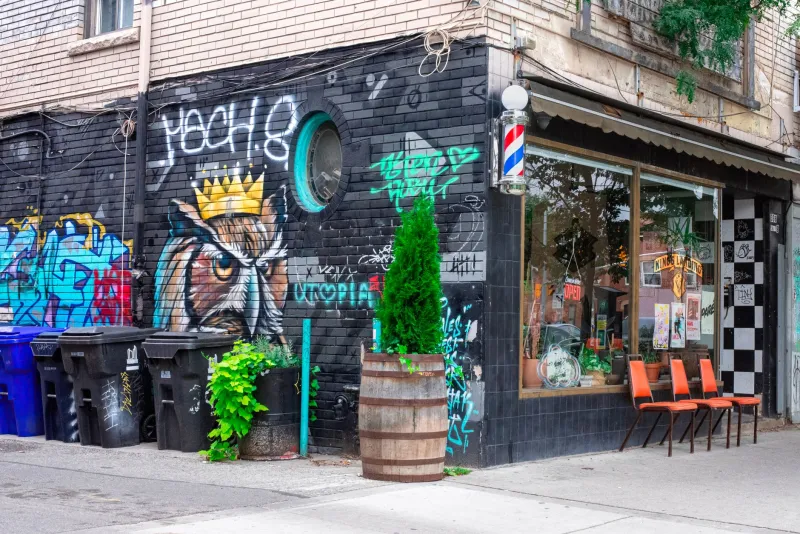
A local-first walk is built around the places people use on a normal Tuesday: the bodega, the panadería, the hardware store, the butcher, the corner market, the pharmacy with the handwritten sign in the window. These places are not attractions. That is exactly why they are useful. They show you a neighborhood's daily economy, its language, its habits, and its small acts of care.
Why Corner Stores Beat Landmarks
Landmarks are designed to be looked at. Corner stores are designed to be used. That difference matters. When you walk from landmark to landmark, you are following a script written for visitors. When you build a route around daily-life anchors, you are following the way residents actually move.
This does not mean skipping the famous stuff. It means making the famous stuff a side dish instead of the whole meal. A good local-first walk might pass a historic church, but it also stops at the bakery where the church crowd buys bread after service.
Pick Anchors, Not Attractions
Start by choosing four to six small businesses within a two-mile loop. You want a mix of errands: food, hardware, a place to sit, a place to buy something useful. Look for stores with local signage, bulletin boards, and a steady trickle of customers who seem to know each other.
Avoid places that feel like they are performing for outsiders. The best anchors are a little ordinary. They might be a family-run market with a produce stand out front, a hardware store with bins of loose screws, or a bakery that sells out by noon.
Build a Two-Mile Loop
A good route has a shape. Start with coffee or breakfast at one anchor. Walk to a second anchor that gives you something to carry: fruit, bread, a small tool. Use a park or plaza as a midpoint. End at a third anchor that rewards you with a snack or a drink.
Keep the loop under two miles unless you know the area well. The goal is not mileage. The goal is rhythm. You want time to look, time to buy, and time to sit.
The Etiquette That Keeps It Honest
This is the part that matters. A corner store is not a museum exhibit. Do not walk in with a group of ten and start filming. Do not ask the owner to explain the neighborhood for free while you block the register. Do not treat residents as background characters.
Buy something. Keep your group small. Ask before taking photos. If someone says no, put the phone away. If a store is busy, wait or come back. The best local-first walk is the one that leaves the block feeling like a normal day, not a tour bus stop.
A Sample Half-Day Route
In a typical American neighborhood, a local-first route might look like this: start at a bakery for a pastry and a feel for the morning crowd. Walk two blocks to a corner market and buy a piece of fruit. Loop through a residential street to a small park. Stop at a hardware store and browse the bins. End at a taquería or a diner for lunch.
The specifics will change by city. In Brooklyn, the anchors might be a bodega, a Dominican bakery, and a hardware store. In San Antonio, a panadería and a mercado might set the pace. In Chicago, a corner grocery and an old-school butcher shop can anchor a whole morning.
What to Notice
As you walk, pay attention to how the anchors connect. Who is walking between them? What are they carrying? Where do people stop to talk? Which store has a bench outside? Which one has a sign in two languages? Which one knows its customers by name?
Those details are the real itinerary. They tell you what a neighborhood values, how it spends its time, and where its social lines are drawn. A corner store walk will not give you the postcard version of a city. It will give you something better: a sense of how the place actually runs.
On your next QWalk, plan around the small stuff. Start at the bakery. Follow the errands. Let the corner store set the route.