Your Body Knows Before You Do: The Science of What Happens When You Cross a Neighborhood Line
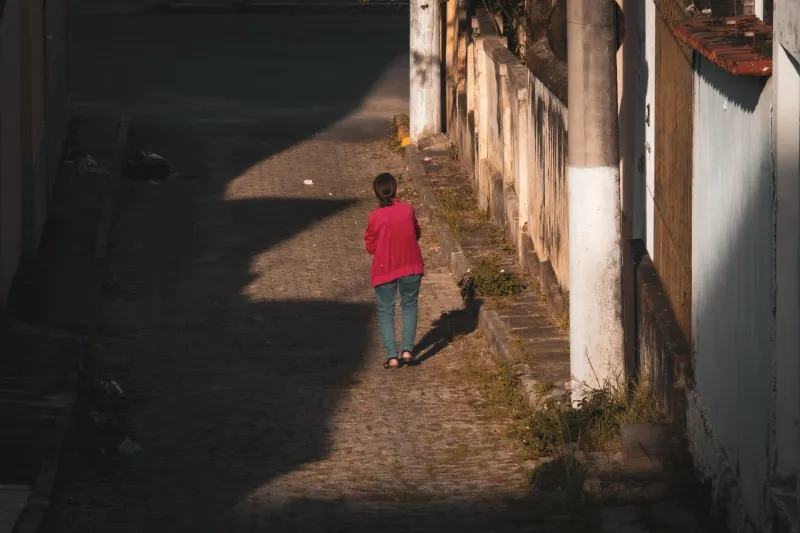
You've felt it before, even if you've never had a name for it. You're walking through a familiar part of the city, moving at your usual clip, half-listening to a podcast or just watching the sidewalk pass underfoot. Then something changes. The trees thin out, or the storefronts shift, or the noise profile of the street rearranges itself. You haven't consciously registered any of it yet — but your stride has already shortened, your eyes have already started scanning at a different angle, and your shoulders have quietly climbed a half-inch toward your ears.
You've crossed a neighborhood line. And your body got there before your brain did.
The Brain's Neighborhood Map Isn't the City's Neighborhood Map
Ask a city planner where one neighborhood ends and another begins, and they'll probably point you to a zoning document, a census tract, or a street that functions as an official dividing line. Ask a neuroscientist the same question, and you'll get a much more complicated answer.
"The brain is constantly building predictive models of space," says Dr. Renata Okafor, a cognitive neuroscientist at the University of Michigan who studies how people navigate complex urban environments. "When you walk through a city, you're not just passively receiving information — you're generating expectations. And the moment the environment violates those expectations, even subtly, your nervous system flags it."
That flag isn't neutral. It's a small but measurable physiological event. Heart rate shifts. Cortisol can tick upward or downward depending on the direction of the transition. The amygdala — the brain's threat-assessment center — gets briefly activated. None of this necessarily means you feel afraid. It means your body is updating its model.
"We call it a boundary response," Okafor explains. "It's the same mechanism that makes you feel disoriented when you walk from one room into another and forget why you went there. Spatial boundaries reset cognitive state. In a city, that happens at a much larger scale, and with a lot more emotional and social data layered on top."
What Urban Walkers Already Know
People who spend serious time walking cities — not tourists hitting highlights, but the kind of obsessive block-by-block explorers who make up the QWalk community — tend to develop an almost somatic literacy around these transitions. They notice them. They've built a vocabulary for them, even if it's informal.
Marcus Trevino, a Chicago-based urban walker who documents his routes on social media and has logged over 3,000 miles of city walking in the last four years, describes what he calls "the lean" — the moment, usually about half a block before a significant neighborhood shift, when his body starts adjusting its posture and speed before he's consciously aware of why.
"It happens going both directions," he says. "Walking into Pilsen from the edge of Bridgeport, I feel myself relax — the murals, the smells from the taquerias, the way the street opens up. But walking back the other direction, there's this subtle tightening. Not fear, exactly. More like... my body is switching modes. Paying a different kind of attention."
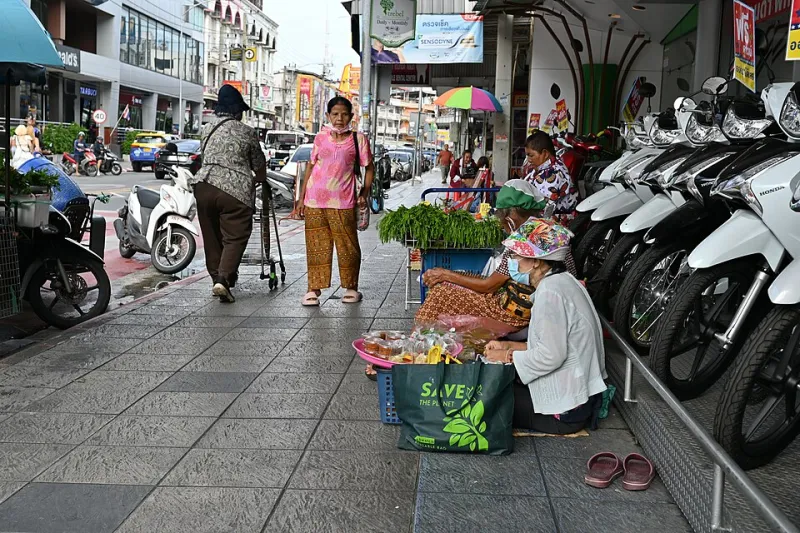
Trevino's description maps closely onto what researchers call "affordance scanning" — the way humans automatically assess what an environment permits or requires of them. A wide, quiet sidewalk with shade trees affords a leisurely pace. A narrow stretch of crumbling concrete next to a six-lane road affords something else entirely. Your body adjusts to affordances faster than your conscious mind can articulate them.
The Role of Sensory Accumulation
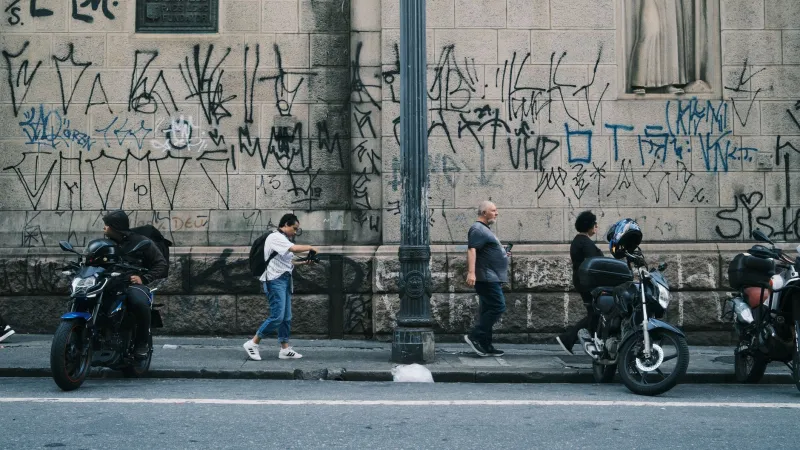
Urban psychologist Dr. Simone Garza, who consults for city planning departments on pedestrian experience, argues that neighborhood transitions are rarely single-signal events. "People tend to think of a boundary as a line — this side versus that side," she says. "But what you're actually experiencing is an accumulation of sensory cues that cross a threshold. Sound, smell, light quality, pavement texture, the density of other people, the ratio of eyes-on-the-street to blank walls. None of these alone triggers the response. It's when enough of them change at once that the body says: new territory."
This is the threshold effect in action. And it explains why some neighborhood transitions hit you hard even when there's no obvious visual marker — no welcome sign, no dramatic architectural shift. The cues are there, just distributed across multiple channels at once.
Garza points to the difference between walking through a neighborhood that has undergone rapid gentrification versus one that has remained economically stable over decades. "In a heavily gentrified corridor, you often get these jarring micro-transitions — a block that feels like Brooklyn, then a block that feels like it did twenty years ago, then a renovated storefront next to a shuttered one. The body doesn't know what model to run. That's genuinely cognitively fatiguing in a way that people don't always recognize as a physical experience."
Why This Matters for How We Understand Cities
The official map of an American city — its zoning districts, its neighborhood association boundaries, its census designations — is a document of categories. But the city your body experiences is a document of gradients, thresholds, and transitions. These two things are rarely the same, and the gap between them tells you something important about how cities actually work versus how they're officially described.
Consider the way race and class are encoded in urban space. Research consistently shows that walkers — regardless of their own background — register neighborhood-level demographic signals within seconds of entering a new block. The brain is reading signifiers: the types of businesses, the condition of infrastructure, the presence or absence of security cameras, the way other pedestrians move and make or avoid eye contact. These aren't just aesthetic impressions. They're data points that your nervous system is processing to answer a very old evolutionary question: is this a place that's likely to go well for me?
For some walkers, crossing into certain neighborhoods triggers a relaxation response — a sense of familiarity, safety, legibility. For others, crossing the same line triggers heightened vigilance. The city is the same. The bodies moving through it are having completely different physiological experiences.
"That's the thing people need to sit with," Okafor says. "The city isn't just a backdrop. It's actively doing things to your nervous system. And those things are not distributed equally."
Walk It and Feel It
If you want to experience the threshold effect firsthand, here's a simple experiment: pick a cross-town route in your city that passes through at least three or four distinct neighborhoods. Don't listen to anything. Walk at a pace that lets you notice your own body. Pay attention not to what you're seeing, but to how your body is responding — your speed, your posture, your breathing, the direction your eyes are moving.
Before long, you'll start to notice that your body is annotating the walk in real time. It's keeping a record that's different from any guidebook or Google Maps layer. It's the record of what it actually feels like to move through the city as a human animal, reading space the way humans have always read it — with everything you've got, all at once.
That record is worth paying attention to. It's one of the most honest things a city will ever tell you about itself.