After Dark: What Night Walking Reveals About the City You Think You Know
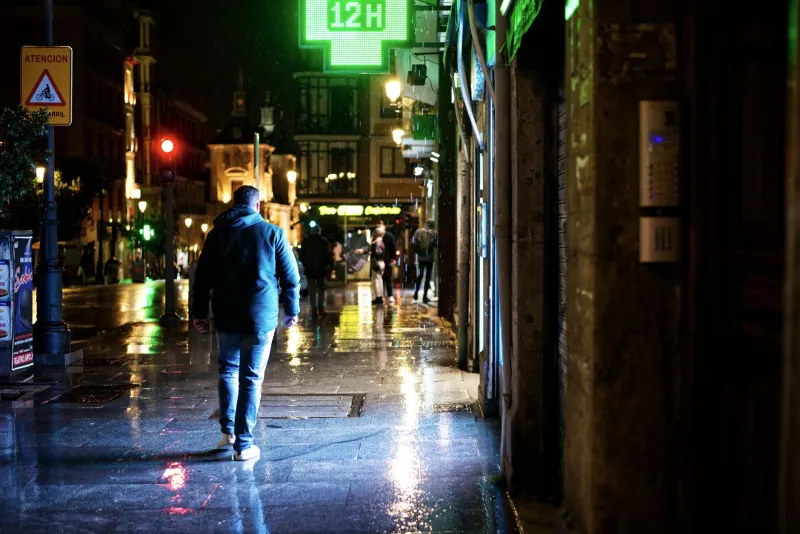
There's a version of your city you've probably never visited. It runs on the same streets, occupies the same blocks, breathes the same air — but it only shows up after the sun goes down. The bakeries running overnight shifts. The park benches occupied by people who actually use them for conversation. The way a neon sign turns a wet sidewalk into something that looks like a painting.
Night walking — intentional, curious, unhurried walking after dark — is one of the most underrated tools in any urban explorer's kit. It's not reckless. It's not a dare. It's a completely different lens on a place you thought you already understood.
Your Senses Get Recalibrated
When you strip away the visual noise of daytime — the storefronts competing for attention, the crowds, the relentless motion — your other senses quietly take over. Smell becomes astonishing. A block that's completely unremarkable at noon might hit you with the warm exhaust of a restaurant kitchen at 11 p.m., or the sharp chlorine drift from a laundromat vent, or the surprisingly sweet scent of garbage fermenting in summer heat. These aren't pleasant smells, necessarily, but they're honest ones. They tell you what a block is actually doing.
Sound reshapes the city too. Daytime walking is loud in a way that flattens everything into background noise. At night, individual sounds emerge — a television through an open window, the hiss of a city bus on a wet street, someone practicing guitar three floors up. Cities speak differently after dark, and if you're moving slowly enough on foot, you can actually hear what they're saying.
Light itself becomes an experience rather than just a utility. The way streetlights pool on pavement, the glow leaking from a corner store, a single illuminated window in an otherwise dark building — these details vanish entirely in daylight. Night walking turns them into a kind of map, one drawn in warmth and shadow.
The 'Dangerous Neighborhood' Myth Gets Complicated
Here's an uncomfortable truth that experienced night walkers tend to arrive at pretty quickly: a lot of what gets labeled 'dangerous' in American cities is really just unfamiliar. Neighborhoods that daytime visitors avoid — because of their demographics, their reputation, their distance from tourist infrastructure — often turn out to be some of the most alive places in a city after dark.
Take the stretch of Cermak Road in Chicago's Pilsen neighborhood. By day, it's a busy commercial strip that gets plenty of foot traffic. After 10 p.m., it transforms into something richer — families out late, taquerias packed, the sound of cumbia drifting out of a bar. Or consider the stretches of Flushing, Queens, in New York, where the night market energy in certain blocks runs well past midnight in a way that feels genuinely different from anything happening in Manhattan.
None of this means night walking is without risk. It means the risk calculus is more nuanced than most people assume, and that fear often functions as a filter that keeps walkers away from the most interesting parts of a city.
Practical Gear for the Night Walker
You don't need much, but a few small adjustments make a real difference.
Wear something with reflective detail. Not necessarily a neon vest — just something that catches headlights. A lot of athletic gear has this built in now. Cars aren't looking for pedestrians at night the way they might during the day.
Bring a small flashlight or use your phone's flashlight sparingly. The goal isn't to light up the whole block — it's to have the option when you're reading a building number or navigating an unlit alley. Over-lighting actually kills your night vision and flattens the experience.
Go with a friend the first few times. Not because night walking is inherently dangerous, but because a second person changes the social dynamic entirely. You're two people out for a walk, which is how most of the world reads it.
Tell someone your general route. This is just good sense for any long solo walk, day or night.
Stay off your phone. This is the big one. The urge to document everything in real time is understandable, but it collapses your awareness down to a four-inch screen. Night walking rewards full presence in a way that daytime walking sometimes doesn't — lean into that.
Cities That Genuinely Transform After Dark
Some cities are better suited to night walking than others, and part of that comes down to street-level activity, lighting infrastructure, and basic walkability.
New Orleans is the obvious one — the city essentially doesn't sleep, and the French Quarter is just the beginning. Walk Magazine Street after midnight and you'll find a completely different rhythm than the brunch-and-shopping crowd that shows up on Saturday afternoons.
Los Angeles surprises people. The assumption is that LA shuts down early, but the city's density of late-night taco stands, 24-hour donut shops, and sprawling commercial strips means there's always something happening at street level if you're willing to walk to it. Silver Lake and Koreatown are particularly good.
Houston's Montrose neighborhood runs a lively late-night scene that most visitors never encounter because they're not on foot. The sidewalk culture is thin by Northern standards, but it's there — and at night, with less traffic, the scale of the streets feels more manageable.
Portland, Oregon in summer offers some of the best night walking conditions in the country — mild temperatures, good street lighting in most neighborhoods, and a culture that's genuinely comfortable with people just wandering around.
What You're Actually Looking For
The goal of a night walk isn't to find danger or to prove something. It's to catch the city in a less performed state. Daytime urban life involves a lot of staging — storefronts optimized for foot traffic, parks curated for Instagram, neighborhoods presenting their best face to whoever might be passing through. After dark, that performance relaxes. You see who actually lives somewhere, what they actually do, how a neighborhood actually functions when it's not trying to impress anyone.
That's what makes night walking one of the most honest forms of urban exploration available. It doesn't require a special destination or a curated tour. It just requires showing up when most people have already gone home — and paying attention to what's still out there.
Some of the best blocks you'll ever walk, you'll walk in the dark. You just have to be willing to go look.