Close Your Eyes and Walk: The Hidden Language of Sound, Smell, and Texture That Cities Speak
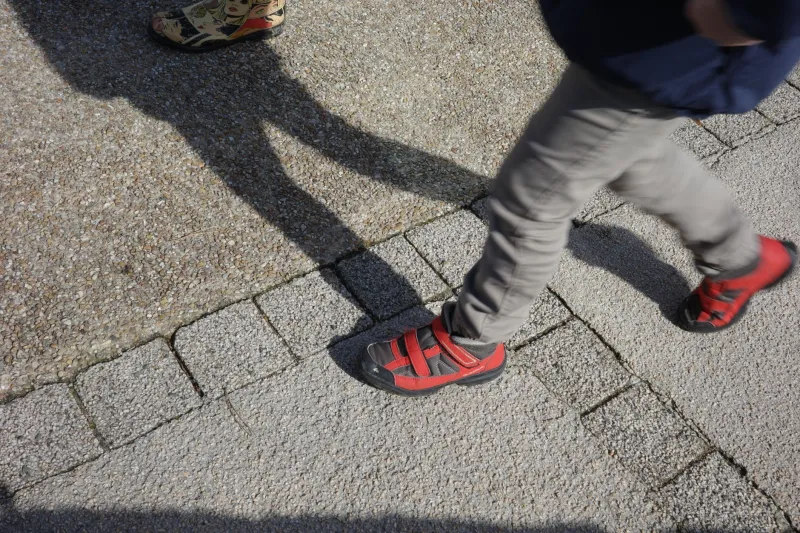
Here's a challenge for your next city walk: spend the first ten minutes with your eyes mostly down. Not staring at your phone — just letting your other senses do the heavy lifting. What do you hear? What hits your nose? What does the ground feel like under your shoes?
Most of us walk through cities in full visual mode, scanning for landmarks, storefronts, and Instagram angles. And look, there's nothing wrong with that. But you're leaving most of the story on the table. The richest, strangest, most revealing information a city has to offer doesn't come through your eyes. It comes through everything else.
The Quiet That Tells You Everything
Sound — or the absence of it — might be the most underrated urban data point there is. Walk through a wealthy residential neighborhood in almost any American city and notice how the ambient noise drops. Fewer buses. No delivery trucks grinding gears. The mechanical hum of the city just... fades. That quiet isn't accidental. It's the result of decades of zoning decisions, infrastructure investment, and political capital being spent to keep certain streets peaceful.
Now walk ten blocks in almost any direction toward a lower-income area and track how the soundscape shifts. More traffic. More diesel. The bass rattle of a city bus pulling away from a stop that's been there since the 1970s. None of this shows up on a map. No walking app flags it. But your ears catch it immediately, and once you start listening for it, you can't unhear the inequality baked into urban noise levels.
Beyond the social stuff, sound also tells you about physical space. Wide-open plazas have a particular acoustic emptiness — your footsteps echo differently, conversations carry farther. Narrow historic streets in places like Philadelphia's Society Hill or New Orleans' French Quarter trap sound and bounce it back at you. You feel enclosed even when the sky is wide open above. Architects call this acoustic intimacy, and it's a huge part of why some old neighborhoods just feel more alive than their newer counterparts.
Follow Your Nose Through History
Scent is where things get really interesting — and honestly, a little weird — because smell bypasses rational thought and hits memory and emotion directly. There's actual neuroscience behind this, but you don't need a textbook to feel it on a walk.
The smell of roasting coffee drifting out of a small-batch roaster tells you something about a neighborhood's economic moment — gentrification often arrives on a cloud of artisanal caffeine. The yeasty warmth coming from a decades-old bakery in a Polish neighborhood in Chicago or a Vietnamese sandwich shop in Houston tells you who settled here and what they built. These aren't tourist attractions. They're olfactory history lessons.
Industrial edges smell different again. Walk toward a working port, a rail yard, or a food processing facility and your nose starts sending signals long before any visual cue appears. Diesel and brine near a waterfront. The sharp chemical note near a dry cleaner cluster. The sweet-sour funk of a commercial kitchen exhaust vent. These smells mark the working anatomy of a city — the infrastructure that keeps things moving but rarely makes it onto a curated walking tour.
And then there's the smell of absence. Vacant lots in post-industrial neighborhoods often carry a particular dry, dusty, faintly metallic odor — the ghost of whatever used to stand there. It's not unpleasant, exactly. It's just... hollow. Walk through Detroit's lower east side or parts of Baltimore near the old steel corridor and you'll know exactly what that smells like. No photo conveys it.
What the Ground Is Telling You
Sidewalk texture is the most overlooked sensory channel in urban walking, which is wild because it's literally what you're standing on. Pay attention to what's under your feet and you'll start reading a city's history and priorities in a completely new way.
Old brick sidewalks — the kind that heave and settle and require you to actually watch your step — are common in historic neighborhoods that either have the money to preserve them or the political will to protect them. Smooth, wide, newly poured concrete usually signals recent investment: a Business Improvement District flexing its budget, a city council member's pet project, or a developer sweetening the streetscape around a new building.
Cracked, patched, and re-patched asphalt tells a different story. It's the sidewalk of neighborhoods that keep requesting repairs and keep waiting. You can sometimes read the repair history like rings on a tree — older patches darker and more settled, newer ones a brighter gray, the whole surface a patchwork timeline of delayed maintenance.
The transitions matter too. Notice when the sidewalk surface changes abruptly as you cross an invisible boundary — maybe a municipal line, a neighborhood edge, or the border between a well-funded school district and a struggling one. Sometimes the physical quality of the ground shifts by half a block. That seam in the pavement is a story in itself.
Building a Sensory Walking Practice
None of this requires special gear or training. It just requires slowing down and paying attention in a different direction than you're used to.
A few things that help: walk somewhere you've been before and consciously block out the visual. Familiar streets are perfect for this because you're not straining to navigate, which frees up mental bandwidth for everything else. Notice when your soundscape changes and stop to figure out why. Let a smell pull you toward or away from something and see where you end up. Pay attention to how your feet feel on different surfaces — the slight give of old asphalt versus the firmness of new concrete, the wobble of a loose brick versus the grip of textured pavement near a crosswalk.
Keep a running mental (or actual) log of what you notice. Over time, you start building what you might call a sensory map of your city — a layered understanding of place that has nothing to do with landmarks or photo ops and everything to do with lived experience.
The Map Nobody's Selling You
Here's the thing about sensory walking: it democratizes the experience of a city in a way that visual tourism doesn't. The quiet streets and the loud ones, the neighborhoods that smell like history and the ones that smell like money, the sidewalks that have been cared for and the ones that haven't — all of it is available to anyone who walks through it. No ticket required. No reservation. Just feet on pavement and senses turned up.
The cities that get under your skin, the ones you remember years later, aren't the ones with the most photogenic skylines. They're the ones where you can still recall exactly what the air smelled like at a particular corner, or the way the sound of the city changed when you turned a specific block. That's not nostalgia. That's a city doing its job — telling its story to anyone willing to listen.